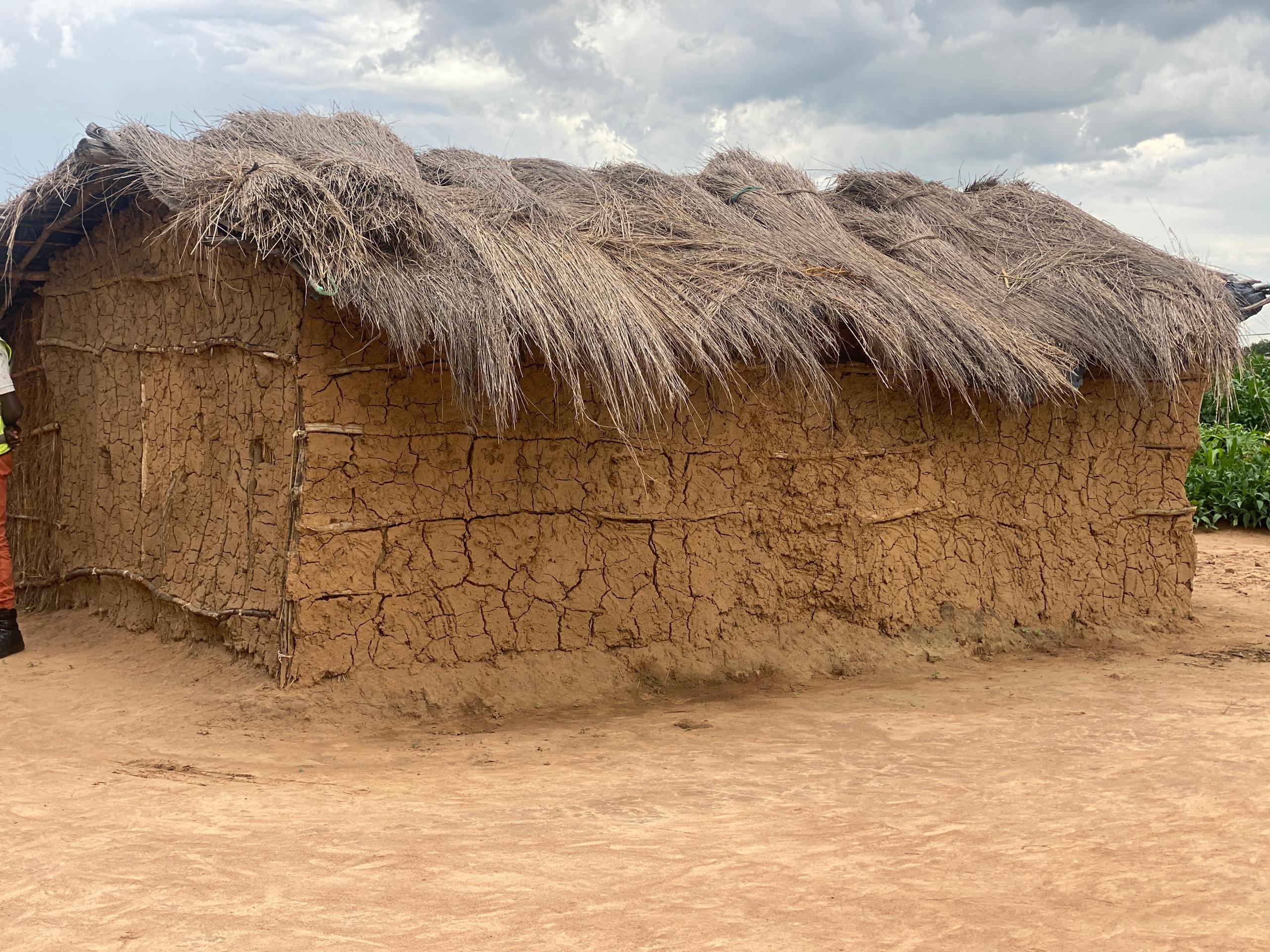
About 80 kilometres southwest of Kasungu Boma, 70-year-old Hastings Mwale lives with his wife, five children and 11 grandchildren in a tiny grass-thatched hut at Nthunduwala Camp in Kasungu District.
The hut is one of many at the camp where 127 households have spent 12 years waiting for a promise that was supposed to last only seven days. Instead of a temporary holding place, the camp has become a permanent home characterised by overcrowding, destitution and uncertainty.
The half-acre piece of land accommodates close to 400 people crammed into brush huts that offer little privacy or protection. Some of the structures accommodate extended families of up to 17 people.
Mwale recalls that their troubles began decades ago when they were recruited from different parts of Malawi to work in tobacco estates in Kasungu districts.
“Back in the 70s, we used to work in estates in Kasungu. Some of us were picked from the south, others from central and northern regions. However, around 1994/5, there were massive retrenchments in the estates.
“We were fired and given nothing yet we worked for many years without holidays or leave benefits. We then went to Zambia working in farms. There also, things did not go as envisaged and government picked and dumped us here,” he recalls.
While in Zambia, Mwale and others worked for farmers who had settled inside the western side of the Kasungu National Park. They were later removed after authorities discovered that the area was protected land.
“We did not know that the area was part of the park because it was being cultivated by Zambians. So one day, park authorities came and destroyed all houses there leaving us destitute,” Mwale vividly remembers.
After discussions between Zambian and Malawian authorities, the families were transported back to Malawi and settled at Nthunduwala Camp.
According to Mwale who was recruited from Phalombe in July 1978, authorities assured them that their stay at Nthunduwala would be temporal. Alas! That was a day dream.
(Mwale)
Initially, the camp residents had no issues with the camp because authorities said it was a waiting place before they move to a permanent location where they would own land to cultivate crops for their livelihood.
“But this has not happened. It is perhaps the longest seven days man has ever lived on earth. We have lived a troubled life ever since. You can see for yourself,” stresses Mwale.
Returning to Phalombe is no longer an option for him because living more than a decade away, he no longer knows where exactly he came from or whether anyone would recognise him.
For younger residents such as 25-year-old Selina Biliati, the camp is the only home they know. She was 11 years old when she arrived in 2012 and has since married another resident. Their three children are now growing up in the same difficult conditions.
Life at Nthunduwala camp is hell with congested huts yet the residents cannot construct bigger shelters because there is not land. The entire camp has only two toilets – one for men and the other for women.
“We don’t have food; we don’t have land; we don’t have anything to rely on. People here say we are refugees and don’t have any respect for us. Our children don’t have school uniform and cannot be allowed in school because of that. There is literary nothing good we can point at here at the camp,” Biliati laments.
Another resident, Lucy Nkhoma, says the overcrowding has eliminated privacy, with adults and children forced to share the same confined spaces.
“Here, there is no male or female, young or adult. These kids you see know everything about what married people do because they see what we do as husband and wife. Some couples opt to have sex it in the bush at night but it is not safe,” she says.
The plight of Nthunduwala residents has attracted attention from human rights advocates, including the Catholic Commission for Justice and Peace (CCJP), which has been calling for their relocation.
Hastings Kalima CCJP Kasungu coordinator says the prolonged stay at the camp represents a denial of basic dignity.
“A person cannot be a refugee in their own country,” he observes.
Minister of Lands, Housing and Urban Development Chimwemwe Chipungu visited the camp recently and described the situation as unacceptable.
“It’s a pathetic situation to see our brothers and sisters living in such a destitute situation. As a ministry we will go back and try to find land applicable for living just as well as for farming,” Chipungu said.
The minister also said government would engage other stakeholders to mobilise support for the affected households.
“We have to include other stakeholders that would be in a position to assist us here. We are going to speak to donors as well because the people here need food, shelter, tents, maize.
The Minister observed that “It’s sad they live in such small grass houses that are prone to accidents like wind and fire.”
During his visit, Chipungu provided K1 million in assistance to the community, but residents insist that relief support is only a temporary measure because their biggest demand remains access to land where they can rebuild their lives and become self-reliant.
Camp chairperson Stanley Lyson Nkhoma says the community wants a lasting solution.
“We do not want to depend on handouts, forever. We are energetic and ready to work, but we have no land. The minister’s visit gives us hope that government is serious and that something will finally be done to relocate us,” he says.
Traditional Authority Nthunduwala has also appealed to government to urgently intervene, saying the residents have endured hardship for too long.
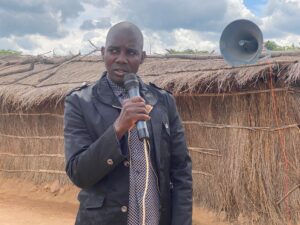
(T/A Nthunduwala)
Meanwhile, trapped in a place they never envisaged to call home, the residents’ waiting continues as the seven day-promise further stretches, indefinitely.
By Topson Banda
#KCRnews