At 3:00 AM when the rest of Siliuka Village in the area of Traditional Authority Simlemba in Kasungu District is still wrapped in the silence of the night, Dorothy Banda is already awake preparing for a journey that has become part of her life for decades.
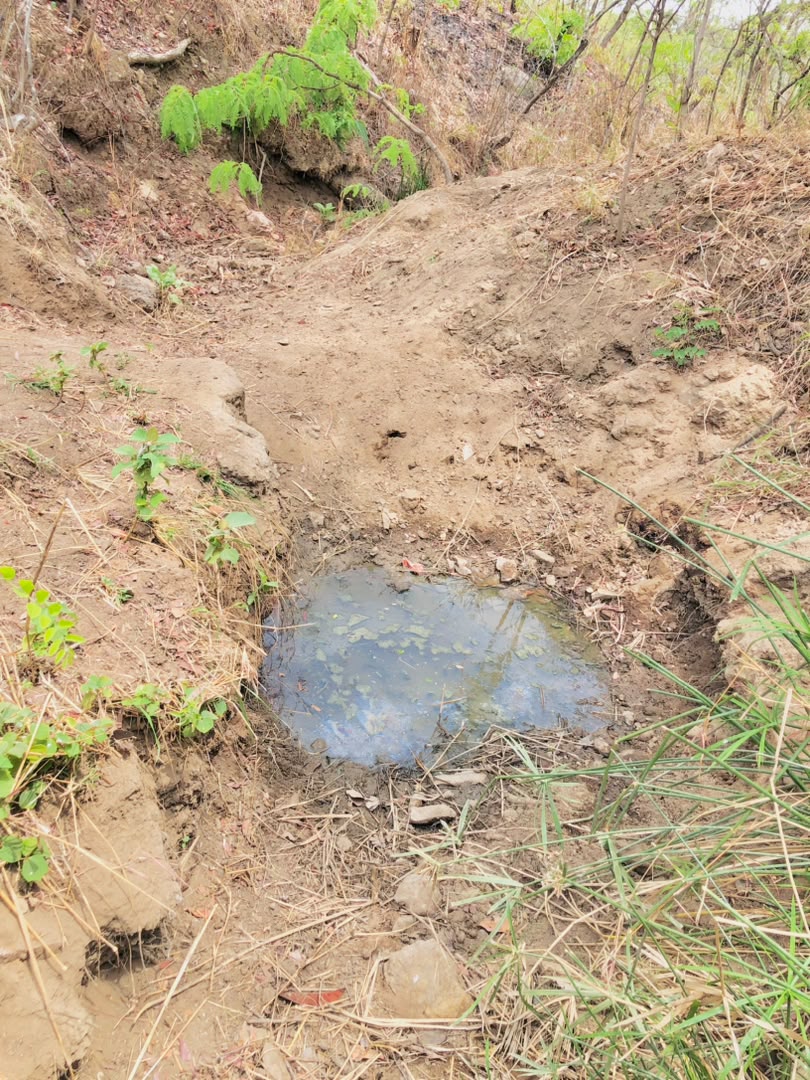
With a 20-litre yellow pail balanced against her hip, the 48-year-old mother of seven slips into the cold darkness, navigating familiar paths in search of water. Her destination is Kankhande, a gully where rainwater collects in shallow pools, offering a temporary lifeline to a community struggling to quench its thirst.
When Banda wakes up at two or three o’clock only to discover that the shallow pools have dried up, her entire household faces the consequences. The only alternative is to travel almost four kilometres to a borehole near Manjondo Primary School.
“Almost every day, I make sure I wake up as early as possible so that I can find water in the shallow pools, especially in Kankhande or Liwerezi River. These sources almost dry up completely when the sun reaches its peak,” Banda recalls.
The situation is further complicated by the fact that the same shallow pools that sustain human life also serve as watering points for livestock, with cattle and goats sharing the water with residents.
Banda’s experience is not isolated. Deborah Banda shares almost identical struggles in Siliuka Village. Her experience mirrors that of women across Group Village Heads Siliuka, Mdimba, Gomani and Chalunda, all under Senior Group Village Head Manjondo, where access to clean water remains a major challenge.
“When we collect water from these pools, we do not treat or boil it to kill germs. We simply give it to our children as it is. The water sources are also dumping sites of waste, but that does not stop us from collecting it because we have nowhere else to go,” Deborah explains.
It is against this backdrop that The Sonder Project has intervened, bringing a development that promises to transform the community’s access to one of life’s most essential resources. The organisation has drilled a borehole in the village with support from Zurich Commercial Insurance Middle East.
Since commencing its operations in Kasungu in 2020, the organisation has undertaken various development interventions. The newly drilled borehole in Siliuka was officially handed over to the community on November 16, 2026. The facility is expected to benefit residents of Siliuka, Mdimba, Gomani and Chalunda, extending access to a more reliable water source beyond the immediate village.
Speaking during the handover ceremony, The Sonder Project’s Country Director in Malawi, Beria Mwaulambo, says the organisation was moved to intervene after witnessing the deplorable conditions under which residents obtain water.
“When you look at the places where these people fetch their water, it is sad and heartbreaking. That is why we have to come in and help them by drilling this borehole to ease the water challenges they face,” she says.
(Mwaulambo with communities )
However, Mwaulambo urges residents to take responsibility for protecting and maintaining the facility, emphasising that its sustainability depends on community ownership.
For Group Village Head Siliuka, the development represents more than a new water point; it is an opportunity to unlock possibilities that have remained out of reach for years. He says the absence of a reliable water source has hindered development initiatives, including activities that could generate income for residents.
“My people are extremely happy with this development. It might look simple in your eyes, but this is a big win for us. We have failed to initiate development projects in this area because we do not have a reliable source of water. Now, with this borehole, we will be able to mould bricks, practise farming and irrigation, and engage in various income-generating activities,” he says with a smile.
The Siliuka intervention forms part of The Sonder Project’s wider development activities in Kasungu. In 2026, the organisation drilled eight boreholes, five in Traditional Authority Wimbe, two in Traditional Authority Simlemba and one in Mdoni, while rehabilitating three additional boreholes. The combined expenditure on the eight newly drilled boreholes and three rehabilitated ones amounted to US$80, 000, equivalent to K138.9 million.
Beyond water provision, the organisation also supports sustainable agriculture, food security and education. It is currently sponsoring 200 students in secondary and tertiary institutions. Nineteen of these beneficiaries are pursuing tertiary education at institutions including LUANAR, KUHeS, MCHS, MUST, MZUNI, UNIMA and Mwimba College.
By Baxton Chipeta
#KCRNews
#YourPartnerInDevelopment